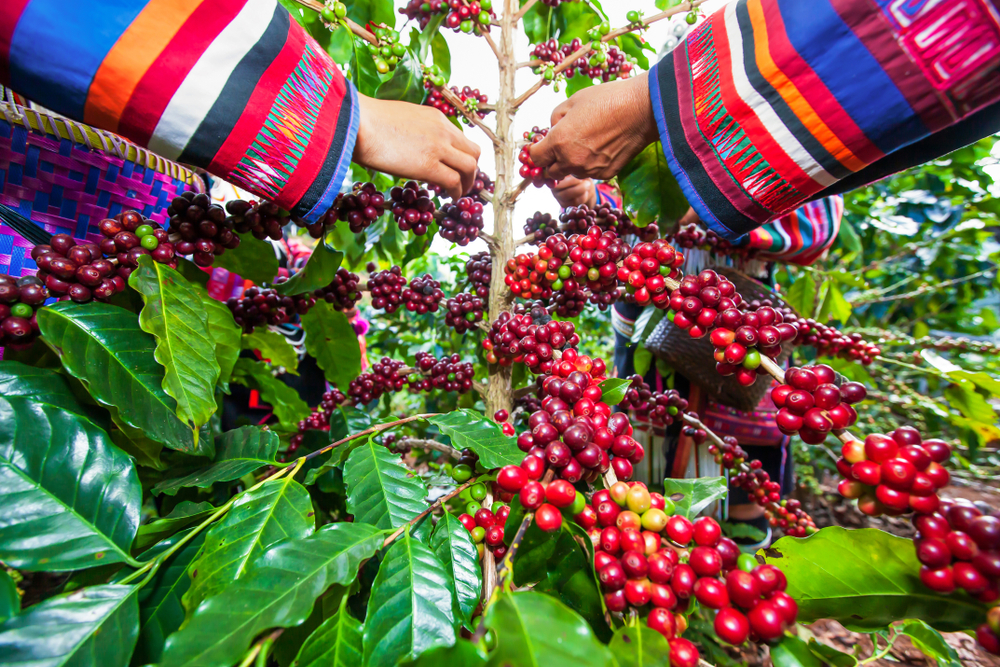
In 2025, exchange prices for coffee beans hit their highest level in the last 47 years. Coffee became the most expensive commodity
on the market for August of last year. Arabica, the standard of quality in the coffee industry, rose by 29%. Some experts noted a shortage of beans this summer.
Rising prices, global warming, and geopolitical factors are pushing businesses to rely on stable raw materials. The guarantor of consistency in the world of coffee is robusta. This variety is attracting growing interest from both consumers and businesses, especially
with the development of the specialty segment.
The choice of raw material for the DrinkX team is a strategic question. The ratio of arabica to robusta directly affects the flavor profile, the recipes of the drinks, the cost price, and how the end consumer perceives them. That is why we systematically test different blends and analyze exchange dynamics and bean behavior
in automated formats, in order to develop the optimal recipes for the needs of a specific business.
In this article, we will look at the pros and cons of arabica and robusta. We will talk about price, flavor, quality, and prospects. And we will draw a conclusion about which coffee is better to choose in 2026.
What are arabica and robusta?
Arabica and robusta are the two main species of coffee trees.
They are grown on an industrial scale. This accounts for 98% of the world’s coffee production. The remaining couple of percent are made up of rare species — liberica (excelsa), Cameroonian shrub coffee, and others.
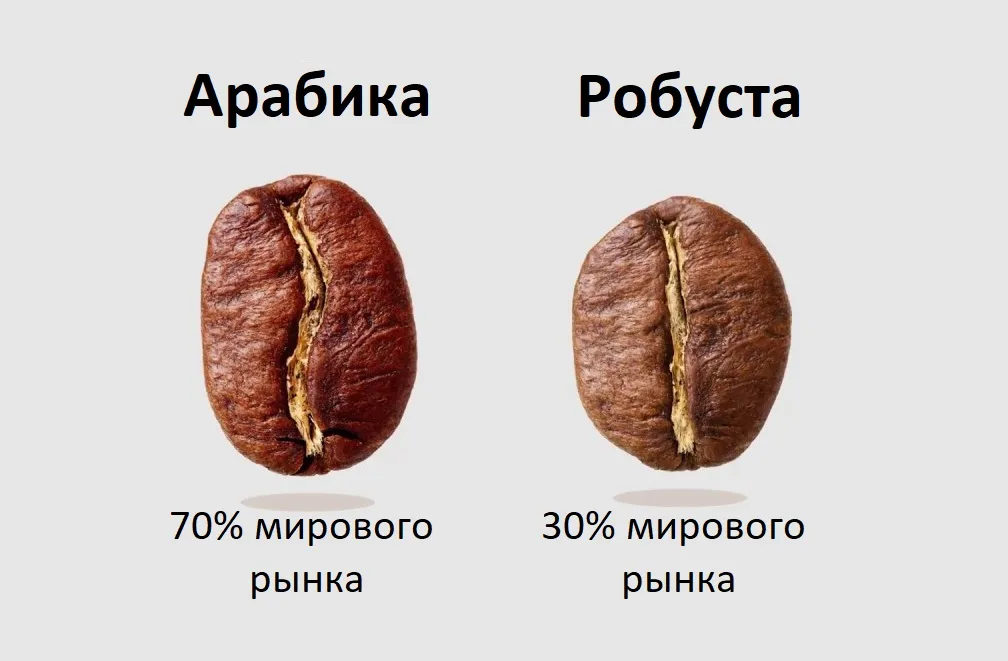
In terms of production volume, about 70% of the world’s coffee comes
from arabica and roughly 30% from robusta. The reason is simple:
for most consumers, arabica tastes better.
The history of the two coffee species
The homeland of arabica is Ethiopia, while that of robusta is the territories of present-day Uganda and the Democratic Republic of the Congo.
At the same time, these two species are closely related genetically: arabica arose as a natural hybrid of robusta and eugenioides. This is a rare species that grows on low shrubs, produces very small beans, and has a low yield, which makes industrial cultivation impossible. It also contains extremely little caffeine — about 0.2%.
This is linked to arabica’s low caffeine content compared with robusta.
The name “arabica” is tied to the route by which the tree spread:
in the 14th century, seedlings were taken from Ethiopia to the Arabian Peninsula. From there, coffee began its tour around the world. Until the end of the 19th century, arabica remained the only coffee species grown on a mass scale.
The word “robusta” comes from the Latin robustus — “strong.”
It was discovered much later, in the second half of the 19th century. The properties of the tree immediately played an important role: hardiness, resistance to disease, fast growth, and high yield. All of this made robusta a convenient tool for stable coffee production that is easy to scale.
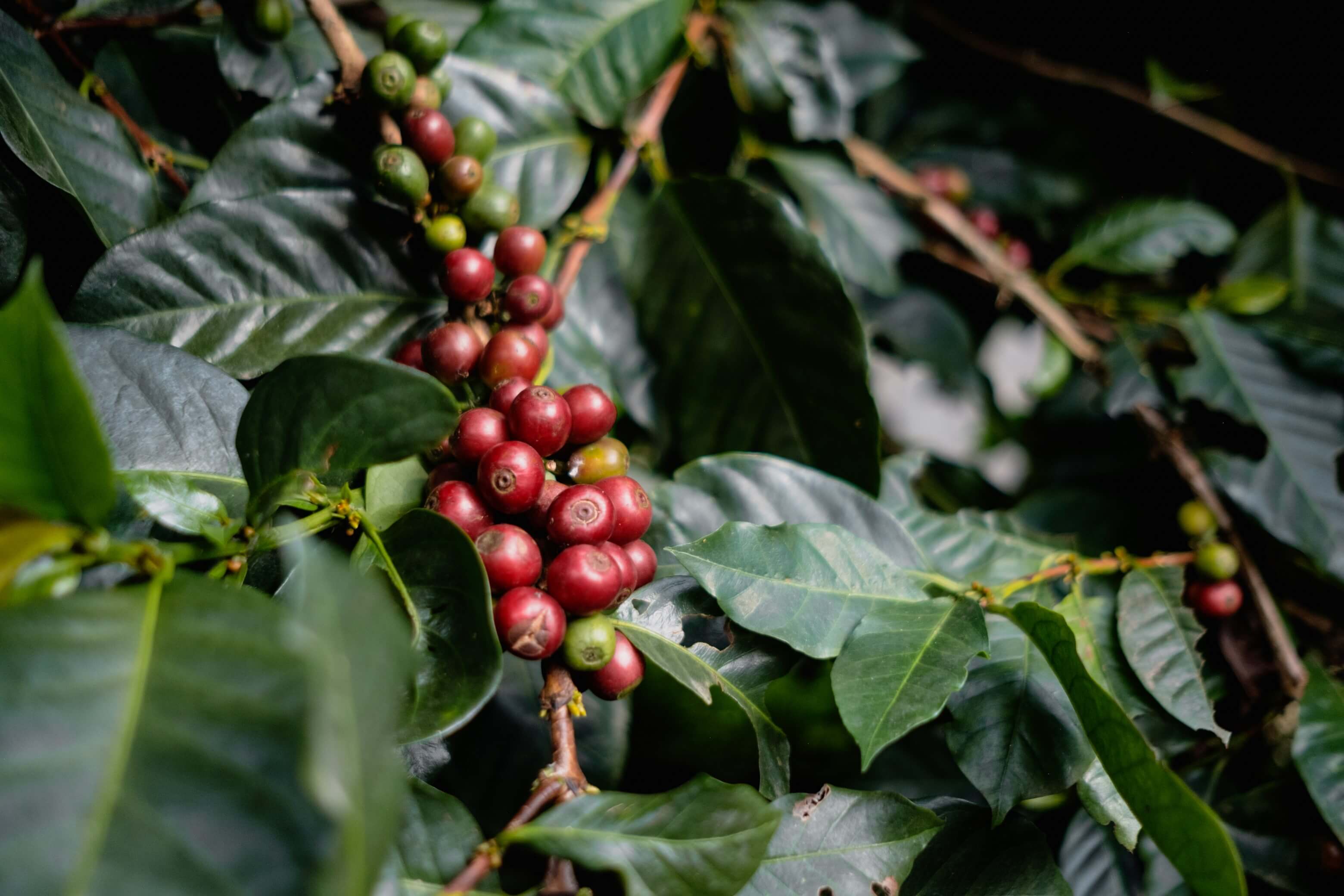
The geography of arabica and robusta
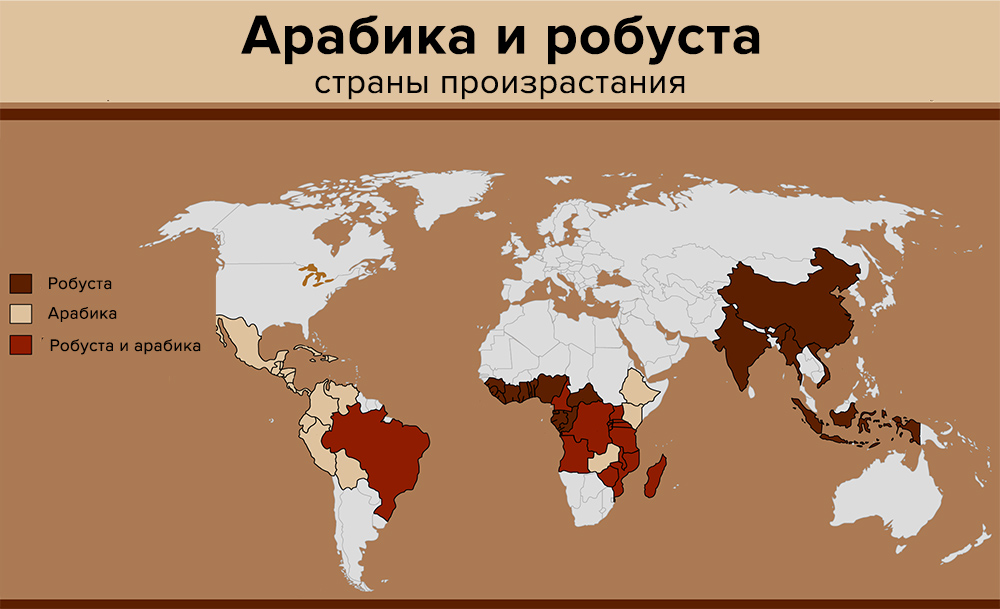
Both species grow in the “coffee belt.” This is the 70–80 countries around the equator. Arabica prefers mountainous regions with a challenging climate, so its main zones are Latin America and East Africa. Robusta’s geography is broader: it includes
Latin American lowlands, Africa, and the countries of Southeast Asia (Indonesia, Vietnam, India).
Arabica is finicky. It needs altitudes from 600 to 2000 meters
above sea level, gentle temperature swings, and mineral-rich soils. Growing arabica requires large investments. After all, the plants are susceptible to disease (in particular, coffee leaf rust) and to artificial-irrigation systems.
In bad years, arabica easily suffers from disease and weather anomalies, which makes the harvest less stable.
With robusta, it is exactly the opposite. It grows well both on the plains
and in the mountains, calmly endures heat and torrential rains, falls ill less often, and does not require such complex care.
How much do arabica and robusta cost?
Over the past few years, droughts and hurricanes have been happening more often.
Because of this, arabica production may be becoming less and less stable, and prices more volatile. This creates risks for the entire chain from farmers to consumers.
Over the past year, arabica rose by 80%, and robusta by more than
twofold. Even so, on average robusta is still roughly half the price of arabica.
However, in 2024 robusta (in particular, the fine variety) rose significantly in price and for the first time matched commercial arabica,
reaching a record 5,330 dollars
per ton.
To cut costs, coffee shops in the low and mid segments often use blends of arabica and robusta. This makes it possible to keep the price of a cup in check without losing much in flavor.
Bean by bean: how do you tell arabica from robusta by appearance?
Beans of the different species are easy to tell apart visually. Arabica beans are larger and longer, concave in shape, with an S-shaped crease.
Robusta beans are usually smaller, flatter, round or teardrop-shaped, with a straight crease — almost like a little tablet.
By the way, what about the flavor?
Arabica is rich in lipids, oils, and sugars. This produces a rich, complex flavor, expressive acidity, bright sweetness, a broader range of aromas, and a long aftertaste.
Depending on the variety and terroir, notes of berries, citrus, flowers, and nuts may appear in the cup. The caffeine content in arabica is about 0.6–1.7%. The body is, as a rule, less dense compared
with robusta.
Many people mistakenly think that caffeine is the main thing in the bean.
This is not true. The substance itself is found not in the bean
but in the skin of the berry. The key role of caffeine is to protect the tree’s fruit. It is scientifically proven that caffeine has an invigorating effect. But just how strong that effect is is a very subjective question. And all the flavor nuances of coffee are imparted by other substances: oils, sugars, aromatic acids, and the like.
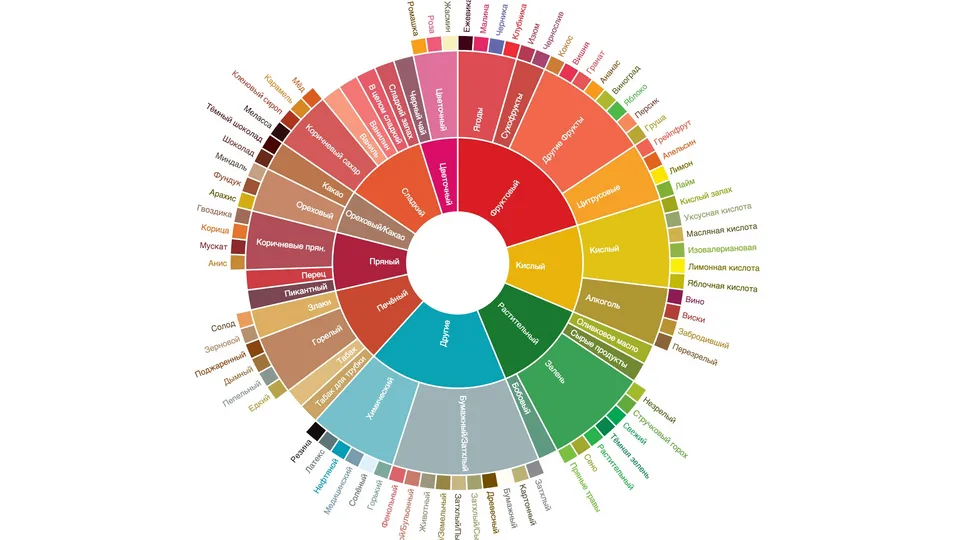
Moving from the center to the edge, you can describe a cup as precisely as possible. Source
With robusta, it is the other way around. It has a higher caffeine content (roughly 1.8–3.5%), more chlorogenic acid and tannins, but fewer sugars and lipids. Its flavor profile ranges from nutty
and woody notes to darker ones — smoke, earth, dried fruit, burnt bread, or cocoa. There is almost no sweetness or acidity,
but the body is dense.
Robusta’s flavor is usually perceived as simple and harsh, without a complex palette of nuances. That is precisely why instant coffee is more often made from robusta.
Be careful: “100% arabica” labels on budget instant (and even some whole-bean) packs of coffee are often misleading. Read the information
about origin on the back of the package or on the manufacturer’s website.
So, is robusta a second-rate coffee?
It’s not that simple.
The climate crisis is already affecting the coffee market. Arabica feels comfortable within a narrow temperature range, roughly from +17 to +21 °C. As warming progresses, plantations have to be moved ever higher. In Brazil, for example, there is not much room for an endless “retreat into the mountains,” so more and more attention is being paid to the quality cultivation of robusta.
In parallel, breeding is developing: different varieties are crossed, combining the resilience of robusta with the flavor qualities of arabica.
Hybrids and their prospects
The classic example of an interspecific hybrid is Timor (Tim-Tim, Híbrido de Timor, HdT). This is the only hybrid that appeared on its own, without the intervention of scientists or farmers. It inherited
a softer and more complex flavor from arabica, and resistance to disease and lower demands on conditions from robusta.
Timor was discovered in 1927 on the abandoned plantations of the island of the same name. There, arabica and robusta crossed by chance. During the coffee leaf rust epidemic, its genetics became a salvation: breeders used Timor to create new resistant varieties.
Over time, the hybrid’s flavor profile — nutty-chocolatey,
with low acidity and a medium-dense body — came to be valued by the farmers of East Timor, although it more often goes into blends.
The catimor and sarchimor lines descend from Timor — compact, high-yielding plants that are resistant to disease. However, all hybrids have 2 problems.
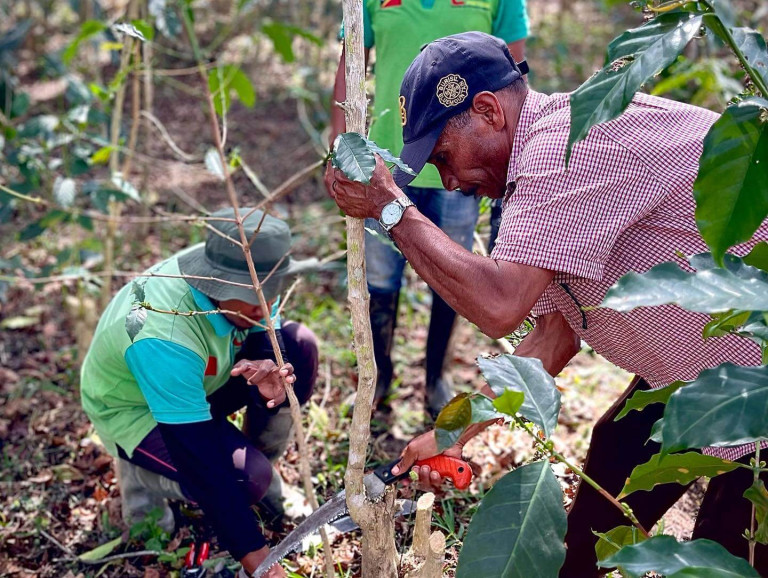
Specialty robusta: flavor, regions, and experience
Fine Robusta is the specialty segment for robusta. Here the emphasis is placed on quality agronomy and processing, not just on hardiness.
Since 2008, the Coffee Quality Institute (CQI) has been actively developing the specialty-robusta segment and has created a grading system for it
by analogy with the Q system for arabica. For fine robusta, what is critical is selective hand-picking (only ripe berries), “quality” processing methods (washed and semi-washed, honey, controlled
natural), and cultivation at high elevations — above 800 meters. All of these measures bring out a complex flavor that has sweetness, chocolate and nutty notes, and sometimes fruity and caramel tones
and notes of dark cherry.
By the way, Fine Robusta contains more antioxidants than arabica. These substances reduce inflammation, slow aging, and protect the cells of the heart and skin.
Right now there are a number of regions where the Fine Robusta project is developing actively.
Vietnam.Fine Robusta is grown in the Central Highlands (Dak Lak, Gia Lai, Lam Dong). Here volcanic soils, altitude, and a tropical climate create good conditions for quality beans. Many farms operate on the principles of sustainable and ethical agriculture: organic, direct trade, fair pay.
This also improves robusta’s image.
India. The Sethuraman Estate farm picks robusta by hand, washes the beans twice, and dries them on trays, producing a profile
with notes of walnut, chocolate, and dried fruit.
Uganda. Softer, more buttery robusta is worth looking for here,
in the historic homeland of this species. The coffee grows at a higher altitude, contains more essential oils, and in its flavor characteristics even resembles arabica.
Brazil. Fazenda Venturim became one of the innovators in working
with robusta: as early as 2018 they were conducting fermentation experiments
together with the Federal Institute of Espírito Santo (IFES), achieving a profile with sweet raisin, prune,
and cognac notes.
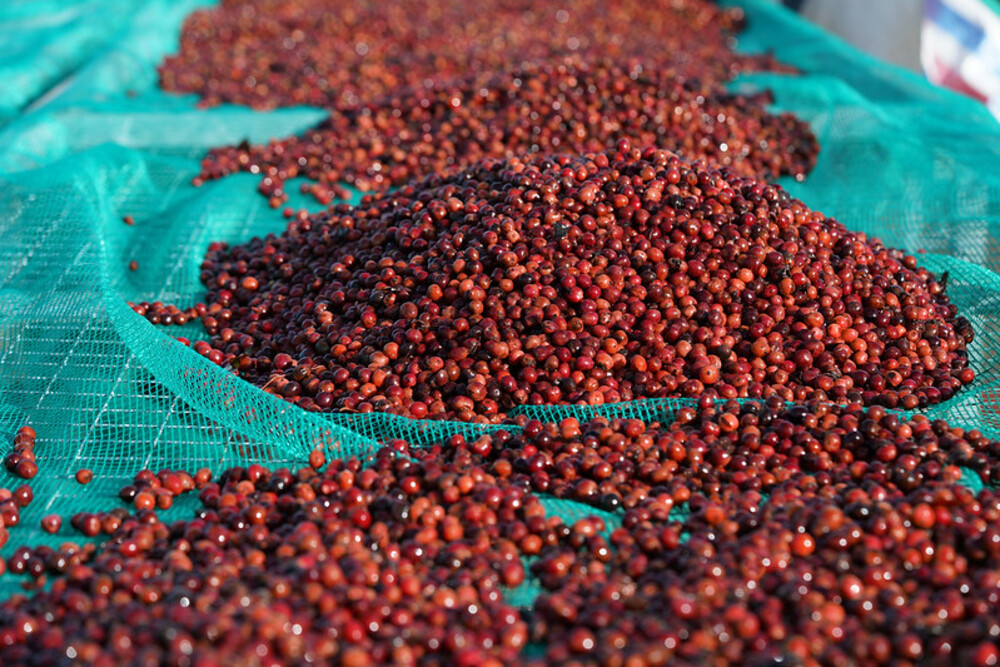
So, are robusta and hybrids the killers of arabica?
No.
Despite the rise of Fine Robusta and the development of hybrids, they will not be able to fully replace arabica. Yes, this is a field for bold experiments. But “killing” arabica is beyond their power: they lack such a spectrum of terroir profiles, such subtle acidity, and such a multilayered aroma.
How do you brew robusta and arabica?
Arabica is versatile. It is used in every brewing method: espresso, cezve, moka pot, filter and pour-over, French press, and cold brew. It opens up especially interestingly under gentle extraction: the dripper, immersion methods, and cold brew, where the fruity, berry, and floral notes are brighter.
The cezve, the drip coffee maker, and the moka pot are ideal for robusta. Here the dense body and high solubility of the bitter substances create a “punchy” espresso or a rich drink for milk mixes.
At the same time, Fine Robusta performs successfully in alternative methods. Bazan Coffee, for example, recommend trying cold brew
and AeroPress on Vietnamese Fine lots to soften the direct bitterness.
A separate story is Vietnamese filter coffee, the “phin” on robusta. This is a slow brew in which robusta, often
with the addition of condensed milk, reveals soft caramel
and chocolate tones while retaining a high strength.
Milk in a robusta drink does a good job of smoothing out the harsh bitterness. That is why classic flat white, cappuccino, and latte based on it can be harmonious, as long as you don’t overdo the robusta share.
Which bean is better for machines and super-automatics?
Automatic and super-automatic coffee machines often use blends with robusta. Usually of a darker roast. Beyond the cost of the raw material, there are other reasons.
their task is different. That is why retail, QSR, and gas stations more often use blends with a high robusta content.
How did concentrates change the rules of the coffee market? Which trends have become the standard of the beverage industry today? Read this article.
Conclusion: what to choose — arabica or robusta?
If you need a sharp morning “punch” against drowsiness and a dense cup, it makes more sense to choose robusta or a blend with a high robusta content.
If the complexity of the flavor, a clean profile, and the interplay of sweetness
and acidity matter more, choose arabica.
There is also a “golden mean” — arabica-and-robusta blends
in a ratio of around 70/30, which give both strength
and a sufficiently rich but still multifaceted flavor.
How this works on the under-counter station — on the home page; short answers on installation, water and service are in the Short answers section.