
DrinkX
ENRU
Request
November 8, 20266 min readExtracts

Coffee Extract Producers in Russia and Worldwide

Who makes coffee extract for business in Russia and worldwide: bag-in-box formats, strength, shelf life and what to look for when choosing.

Coffee Extract Producers in Russia and Worldwide

Coffee extract for business is made both by small Russian producers and by international corporations. Below: who makes it, in what packaging, how long it keeps and what to look for when choosing. The data comes from producers’ websites and industry news as of November 2026; check supply terms with the companies themselves.

What to look for when choosing

Hot or cold. Hot extract is brewed with hot water under pressure and is used for espresso, americano and milk drinks. Cold extract (cold brew) is steeped in cold water and is more often used for cold drinks.
Strength. The share of coffee solids (TDS) determines how much base goes into a cup. At a TDS of about 10%, a 300 ml drink needs roughly 20 ml, and a 3-litre box makes about 150 drinks.
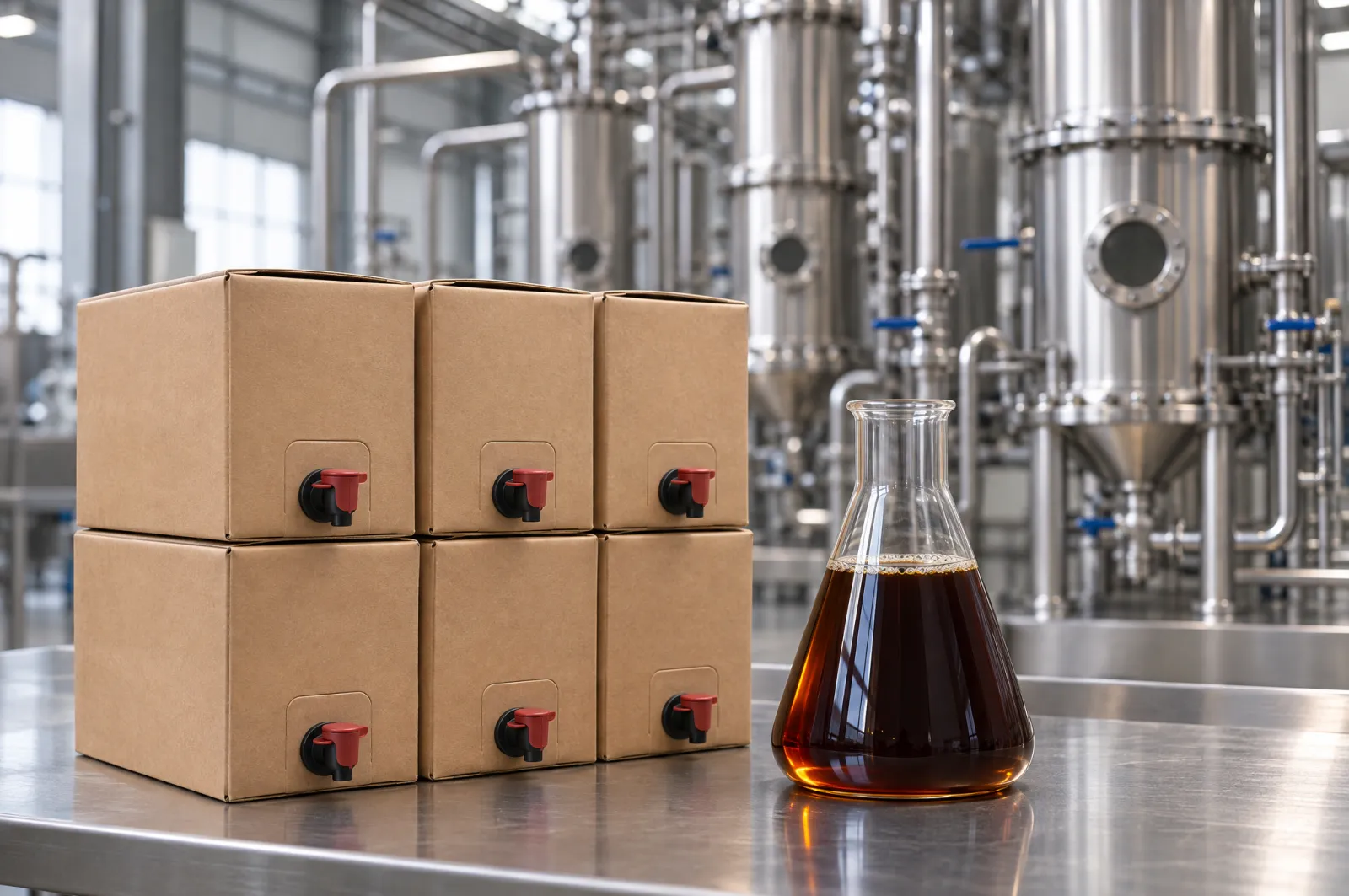
Packaging. Bag-in-box from 1 to 10 litres for points of sale; jerrycans and drums for industrial manufacturing. The bag connector matters: it has to fit the equipment.
Storage. Room temperature, fridge or freezer — it varies from producer to producer. Ask separately about shelf life after opening.
Private label. Many producers brew extract under the customer’s brand, which matters for chains.

Russia

Cool Brew — Moscow and Nizhny Novgorod; a new site in Troitsk has been under construction since 2026.

Extract and concentrate in 1.5, 3 and 10-litre bag-in-box, 0.7-litre bottles and shots; the strength is stated in the product name.
Shelf life: 12 months at +4 to +25 °C (according to the producer’s website).
Also brews extract for other brands: Cool Brew’s facilities make the product for Tasty Coffee, and the producer cites around 30 partner brands.
According to the company, current output is about 4 tonnes of extract a day; the new site is designed for up to 60 tonnes a day.
Website: coolbrew.ru

Tasty Coffee — a roaster; its extract is brewed jointly with Cool Brew.

A 3-litre box makes about 150 cups (20 g per single espresso), TDS about 9%.
12 months sealed, one month after opening, stored at +1 to +20 °C.
Website: shop.tastycoffee.ru

Svarshchitsa Ekaterina — a roaster, Moscow.

Extract in 3-litre boxes — about 100 cups (30 ml per drink).
Until November 2025 the boxes were supplied only to coffee shops and restaurants.
Website: theweldercatherine.ru

P!P Industry — cold extract.

Its own drip cold-extraction method since 2021.
Bag-in-box of 2 and 5 litres; three strengths — for drinking as is, with tonic and with milk.
Can brew using the customer’s beans.
Website: pip-industry.com

Europe

JDE Professional — Cafitesse (Netherlands, part of Keurig Dr Pepper since 2026).

Frozen extract in 1.25 and 2-litre packs — about 190 cups per litre.
Stored at −18 °C; after thawing, depending on the supplier, it keeps 3 to 6 weeks in the fridge.
Works only in Cafitesse machines.

DEK — Deutsche Extrakt Kaffee, AROMAT brand (Germany, Cafea group).

Bag-in-box of 1 and 2 litres, diluted from 1:20 to 1:30.
Stored at up to +20 °C; 6 weeks in the fridge after opening.
For vending, canteens, hotels and offices.

Finlays (UK) — describes itself as the world’s largest producer of cold brew extract.

Bag-in-box of 3 and 5 litres; jerrycans, drums and containers for industry.
Three extraction plants on two continents.

Kerry (Ireland).

According to Kerry, its preservative-free extracts keep for up to 9 months without refrigeration; check the shelf life for the specific product.
Bag-in-box with common connectors.
Opened a new extract plant in Pennsylvania, USA, in 2026.

Nestlé Professional (Switzerland).

NESCAFÉ Alegria — frozen liquid coffee for dosing machines.
NESCAFÉ Espresso Concentrate — a 500 ml bottle for 16 servings, 14 days after opening.

Paulig (Finland) — cold brew concentrate in 1-litre packs for offices and cafés, stored without refrigeration.

Sucafina / TB Brown (Switzerland, Netherlands) and Döhler (Germany) — extracts and concentrates for food manufacturers.

North America

Mother Parkers (Canada).

Opened an extract production facility in July 2026.
Aseptic filling; keeps without refrigeration until opened.
Also makes extract under customers’ brands.

Keurig Dr Pepper (USA) — REVV concentrate and the K-Tap dispenser for cold and nitro coffee, launched in July 2026.

Javo Beverage (USA) — cold brew in 1-gallon bag-in-box for restaurants, chains and convenience stores.

S&D Coffee & Tea — TODDY (USA) — cold brew concentrates for foodservice, stored without refrigeration.

Cometeer (USA) — frozen extract: a 60-serving bag-in-box keeps in the freezer for up to 3 years.

Asia and South America

UCC Coffee Professional (Japan) — has sold Cafitesse in Japan for more than 30 years.

A pack keeps in the freezer for up to a year, and 3 weeks once installed in the machine.

Café Iguaçu and Cacique (Brazil) — industrial frozen extract in jerrycans and drums.

Iguaçu’s shelf life is 18 months at −18 °C.

Buencafé (Colombia) — liquid concentrate from Colombian arabica for the food industry: jerrycans, pails and drums.

CCL Products (India) — freeze-concentrated liquid coffee, including cold brew; plants in India and Vietnam.

Tata Consumer Products (India) — liquid extract for business, plants in India and Vietnam.

At a glance: comparison

ProducerCountryTypePackagingStorageCool BrewRussiahot and coldBiB 1.5 / 3 / 10 l12 months, +4…+25 °CTasty CoffeeRussiahotBiB 3 l12 months, one month after openingP!P IndustryRussiacoldBiB 2 / 5 lcheck with the producerCafitesse (JDE)Netherlandshot, frozen1.25 / 2 l−18 °C, 3–6 weeks after thawingAROMAT (DEK)GermanyhotBiB 1 / 2 lup to +20 °C, 6 weeks after openingFinlaysUKcold and hotBiB 3 / 5 lcheck with the producerKerryIrelandextract for food manufacturers and points of saleBiBup to 9 months without refrigeration

The market is growing

Estimates of the global market for liquid coffee and coffee extracts differ several-fold — from hundreds of millions to over three billion dollars a year — but most analysts expect growth of 5–8% a year into the 2030s. For example, Fortune Business Insights values the market at $3.13 billion in 2025 and $4.88 billion by 2034.
In 2026 Kerry in the USA and Mother Parkers in Canada opened new extract plants, and Keurig Dr Pepper acquired JDE Peet’s, the owner of Cafitesse.
In Russia, Cool Brew is building a site that, according to the company, will raise output from 4 to 60 tonnes of extract a day.

You have the extract — what to make coffee with

Extract is half the job. The other half is equipment that doses it precisely, brings the water to the right temperature and froths the milk. DrinkX equipment works with coffee extract in bag-in-box packs: the coffee, milk and water modules sit under the countertop, and only the tap and the order screen are on the counter. A drink is ready in 30 seconds, up to 100 drinks an hour. The equipment is manufactured in Moscow and already runs in the VkusVill, Pyaterochka, Day2Day and Yandex Lavka chains.

Coffee extract for business → · How the equipment works → · What coffee extract is →

How this works on the under-counter station — on the home page; short answers on installation, water and service are in the Short answers section.

For business

What a station would earn for you

We’ll run the payback on your numbers: traffic, cup price, rent.

Read next — extracts
Coffee Extract Producers in Russia and Worldwide | DrinkX